01

LiveReading platform
CoreBible.APP
Digital study
The primary digital home of the AICNT and Core New Testament, with search, notes, highlights, bookmarks, Strong's data, commentary, worksheets, and Gospel parallels.
Visit projectPublishing program
Each project addresses a different layer of the same question: how can readers engage the New Testament's text, sources, history, and earliest witness with greater clarity?
Digital study
The primary digital home of the AICNT and Core New Testament, with search, notes, highlights, bookmarks, Strong's data, commentary, worksheets, and Gospel parallels.
Visit projectMusic imprint
The music imprint of Integrity Syndicate. Human-authored lyrics set with AI production tools, selectively curated, and streamed free at affinaura.com across stations grouped by style and intensity.
Visit projectEnhanced editions
Classic New Testament scholarship newly transcribed from original printings and reissued as searchable online texts and enhanced print and digital editions.
Visit projectAISV
An agentic English translation of the whole Bible from the Composite Greek Text: the Septuagint for the Old Testament and a newly composed critical Greek text for the New Testament.
Visit projectAICNT
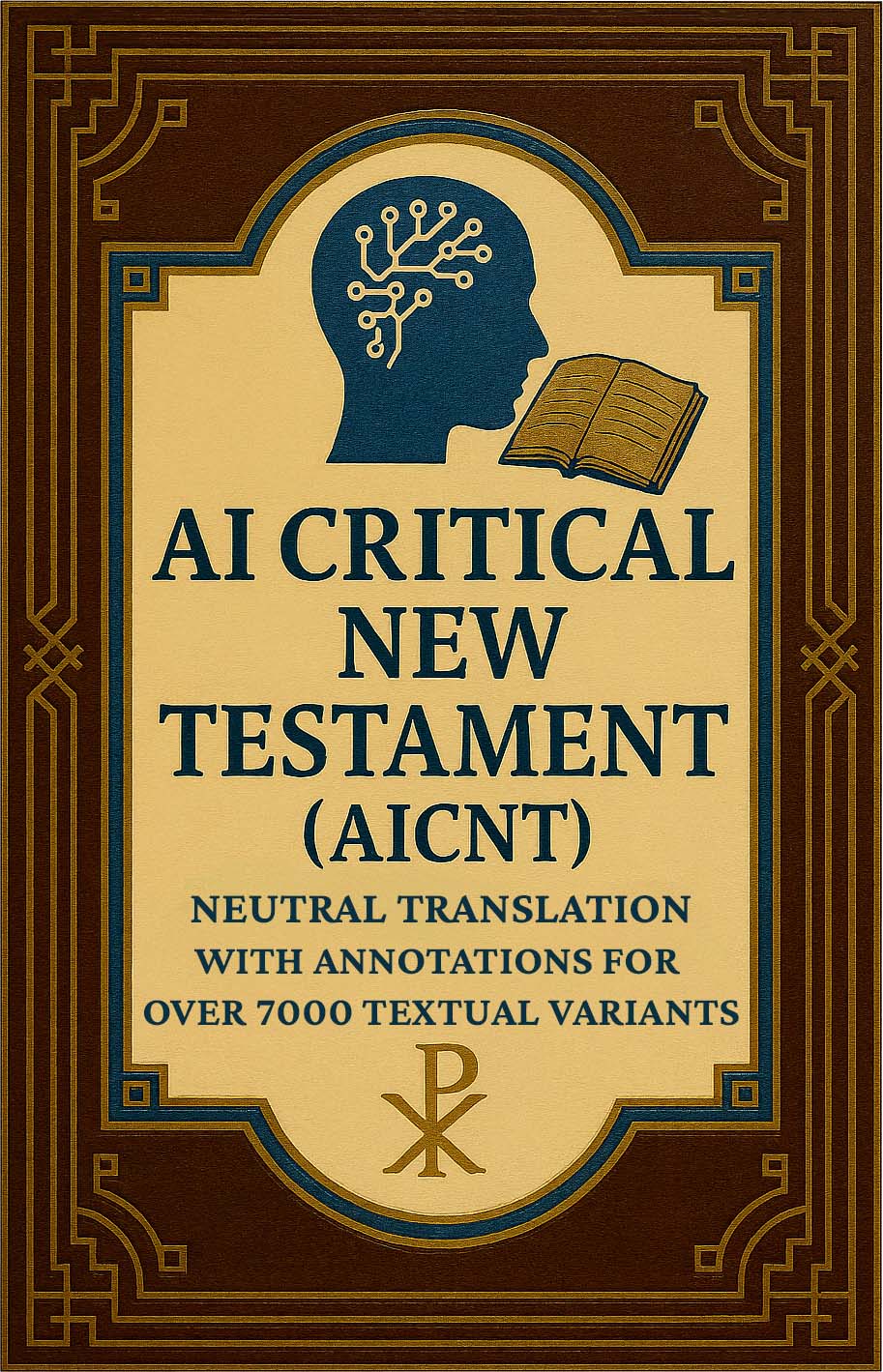
An AI-assisted, scholar-reviewed English New Testament translated directly from Greek and annotated for more than 7,000 textual variants.
Visit projectCNT
A focused three-part corpus—The Gospel to Theophilus, The Book of Paul, and The Kerygma—centered on the earliest recoverable apostolic witness.
Visit projectCFCNT
The historical, textual, canonical, and source-critical argument behind the Core New Testament, with sustained attention to Lukan priority and canon formation.
Visit projectResearch
Critical research on the origins, sources, and formation of the New Testament canon, including clusters on Luke, Mark, Matthew, and John.
Visit projectCompanion research
The literary case that Luke preserves the most primitive Gospel form.
Visit site ↗Why Luke–Acts serves as the primary narrative witness to apostolic Christianity.
Visit site ↗Research on Mark's sources, chronology, and literary development.
Visit site ↗Studies of Matthew's sources, authorship, and historical reliability.
Visit site ↗Critical inquiry into Johannine authorship, composition, and historicity.
Visit site ↗